Personal product
CompraFino
Compare supermarket prices in Peru
Next.js · React · TypeScript · PostgreSQL · Drizzle · GitHub Actions
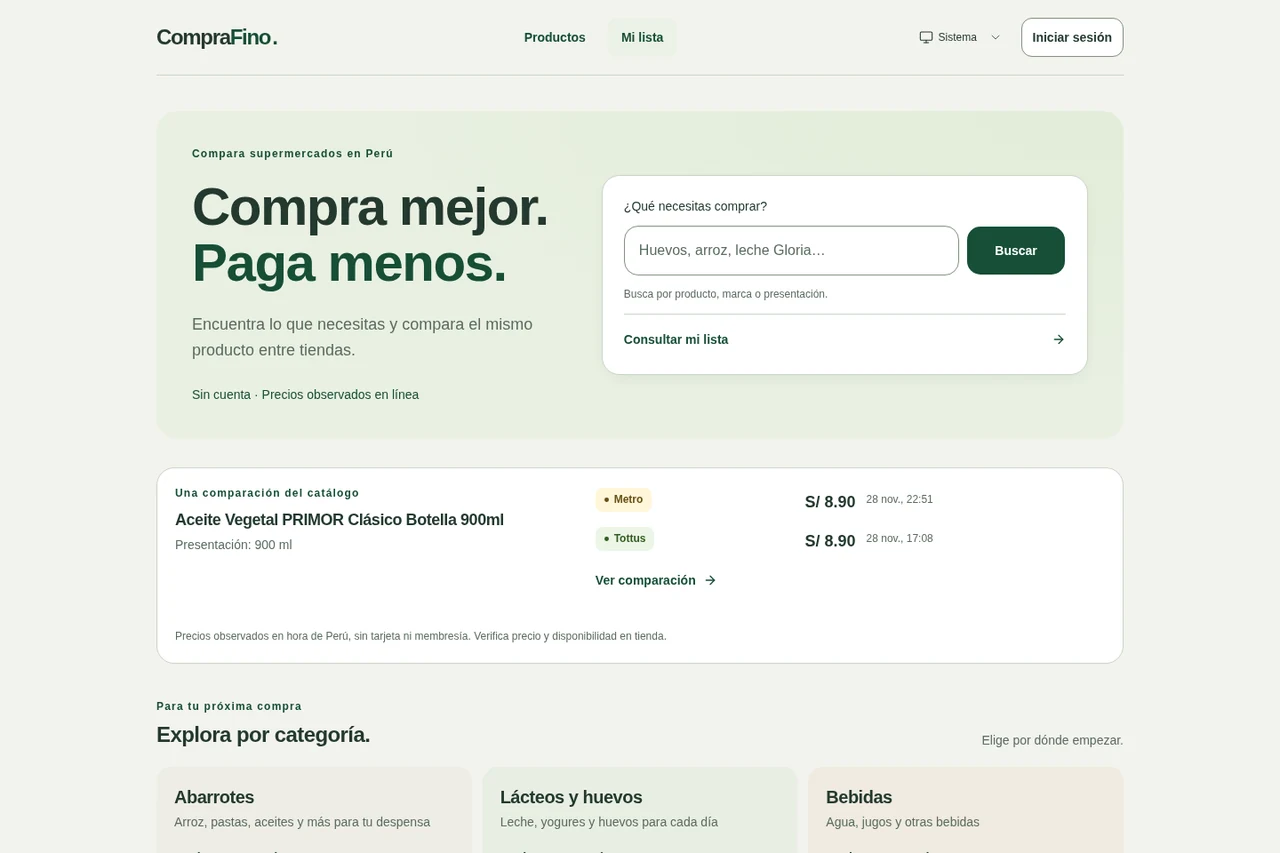
The product in action
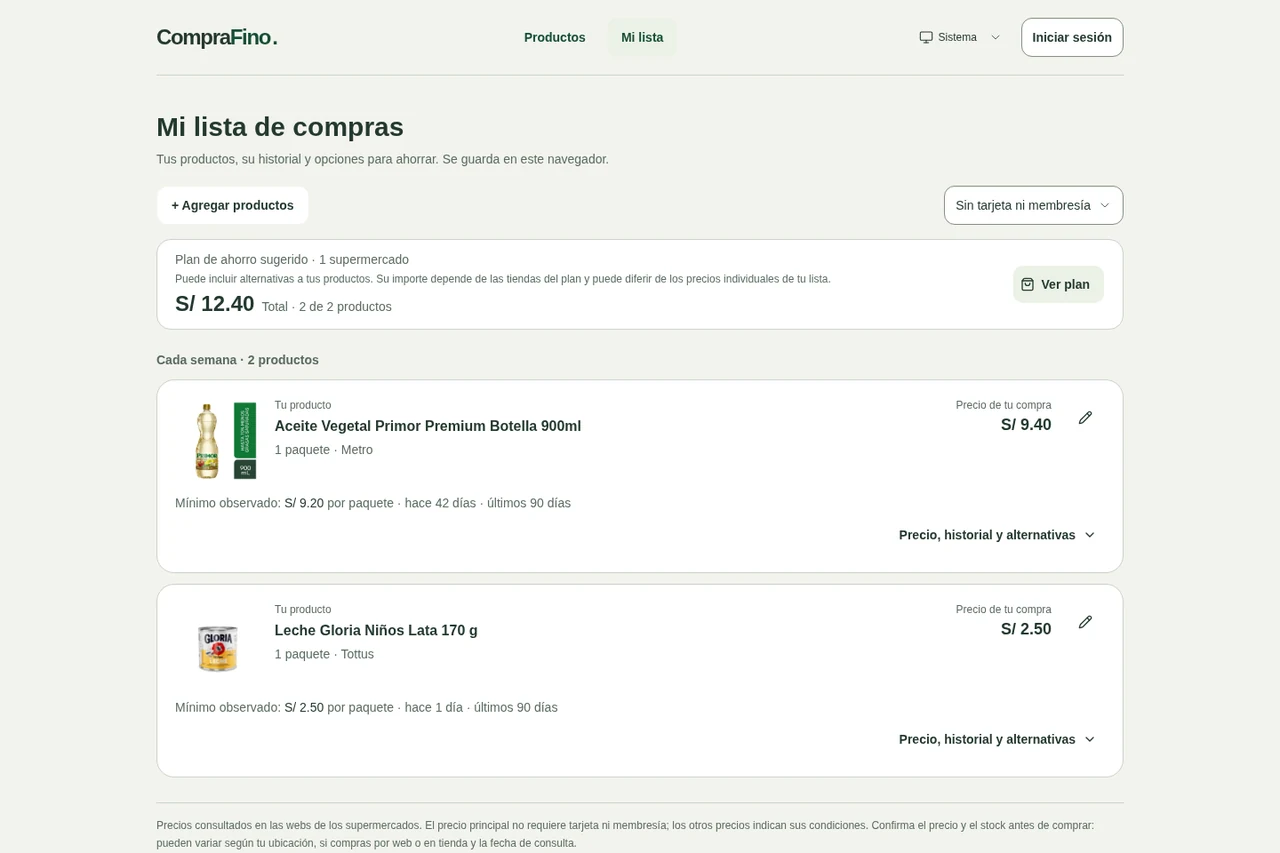
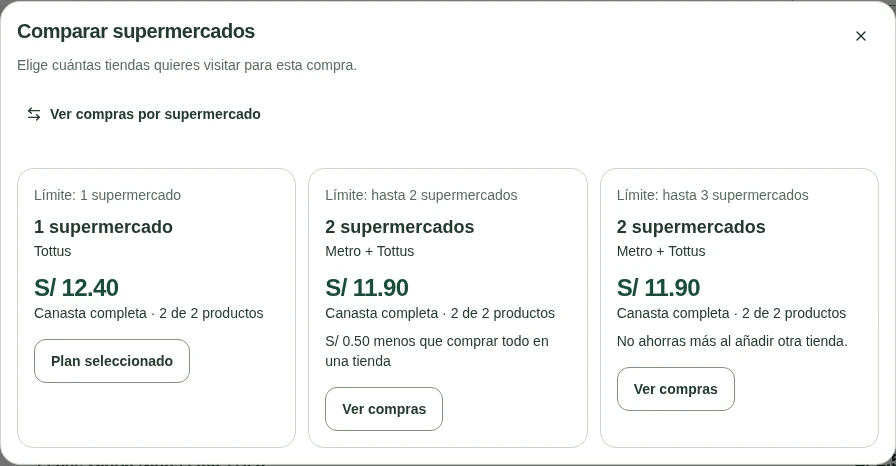
I designed the shopping flow around three questions: what does the same product cost at each store, how has its price changed, and what would my whole list cost? The live app lets shoppers answer all three without signing in. These screenshots show prices observed on November 29, 2026. Prices and availability can change.
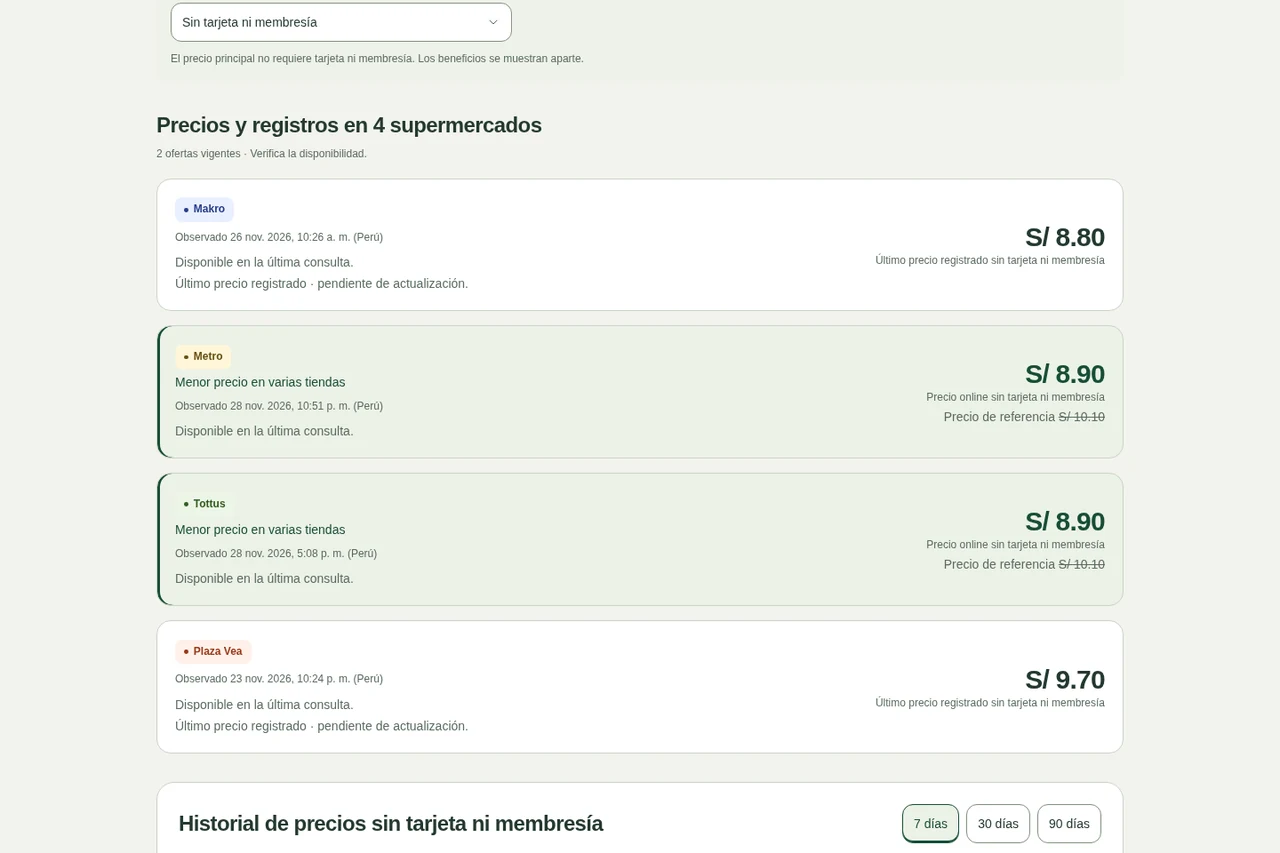
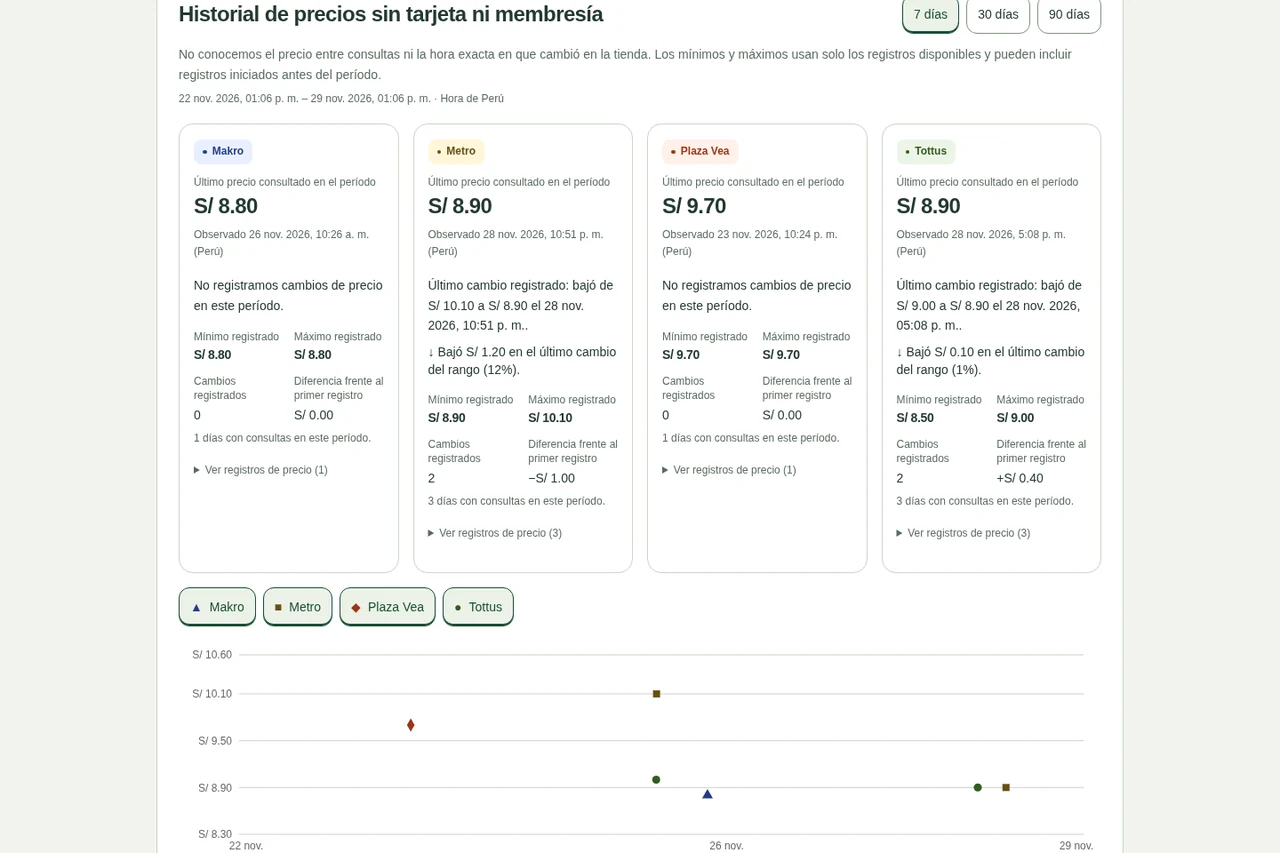
The problem and my role
Retailers can describe the same product with different names, units, and packaging. I built CompraFino end to end to make it easier to compare equivalent listings and plan purchases from observed prices.
Matching the same product
I kept each retailer’s original data and separated normalization from matching. I use brand, quantity, pack size, and variant to decide when two listings describe the same product. If the evidence is ambiguous, the listings can still appear separately in search.
Architecture and ingestion
I organized the pnpm monorepo so the Next.js app, shared UI, comparison logic, database access, and retailer adapters can evolve independently. I use Drizzle for PostgreSQL access and migrations. Scheduled GitHub Actions workflows refresh retailer data so public searches can read from PostgreSQL.
Testing and account sync
I wrote unit tests, PostgreSQL integration tests, and Chromium tests with fixed test data to cover comparisons, price history, and shopping lists. I also implemented account-backed list sync in the codebase. The live walkthrough above shows the browser-local shopping list experience without an account.